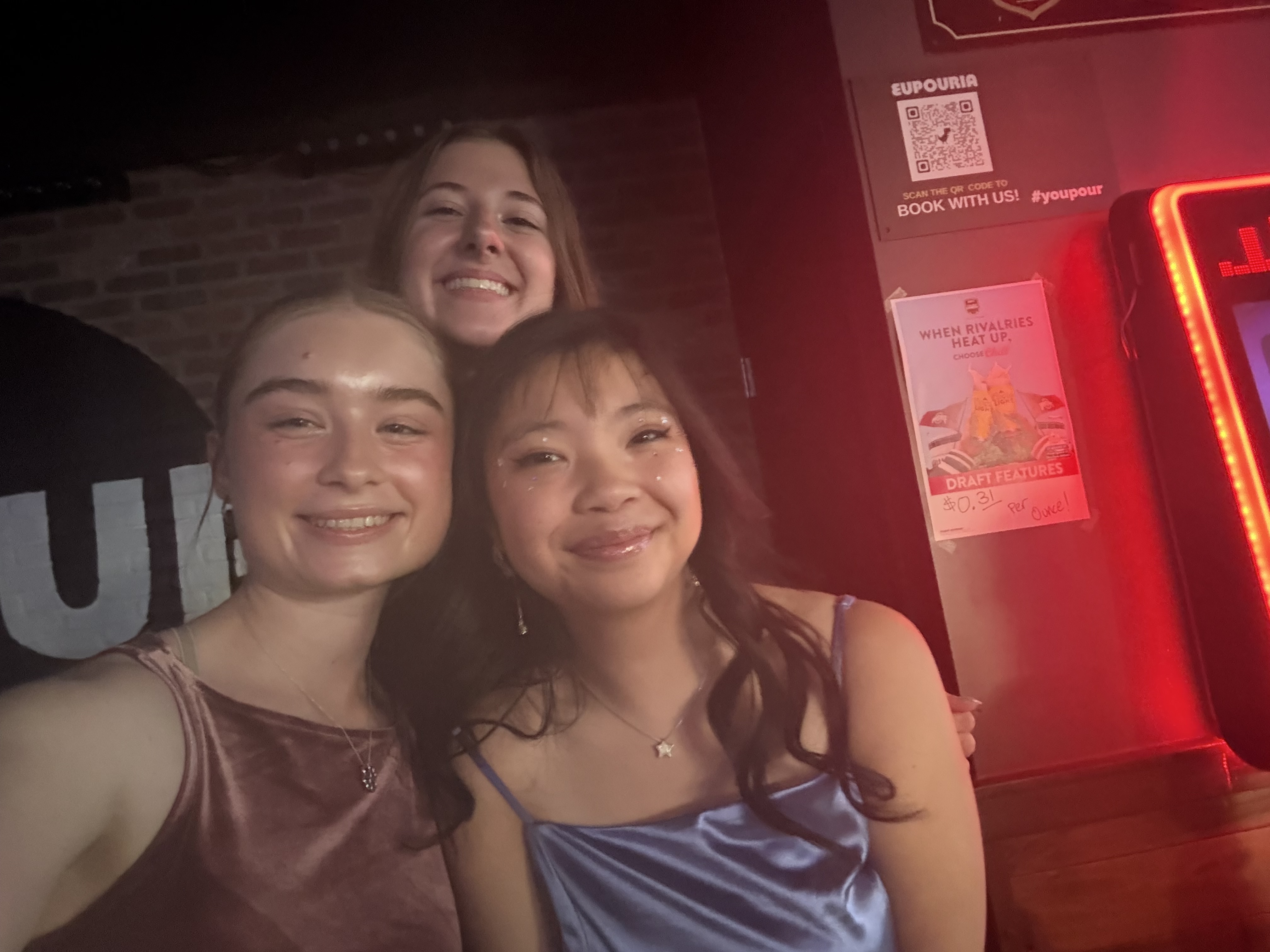
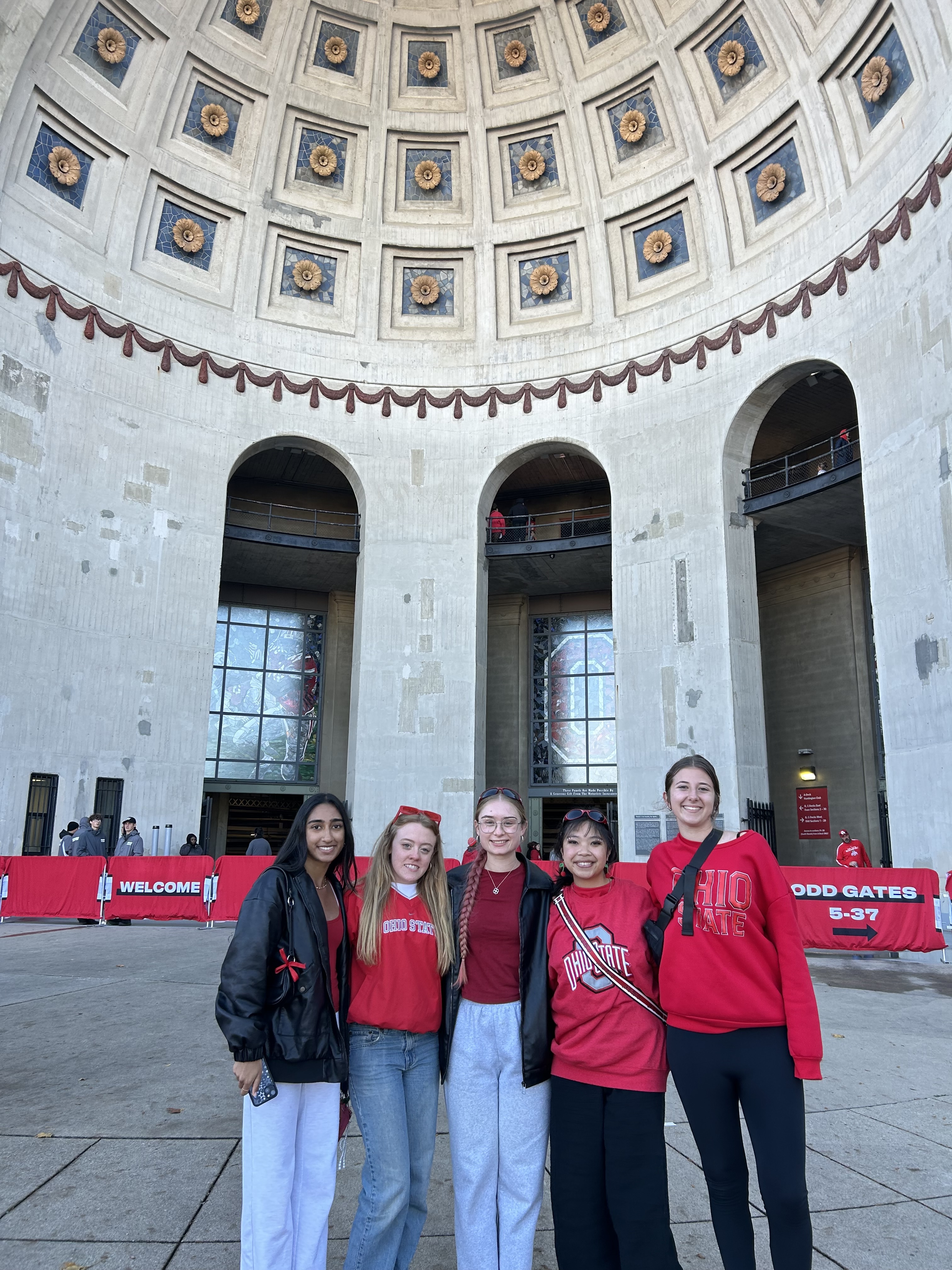
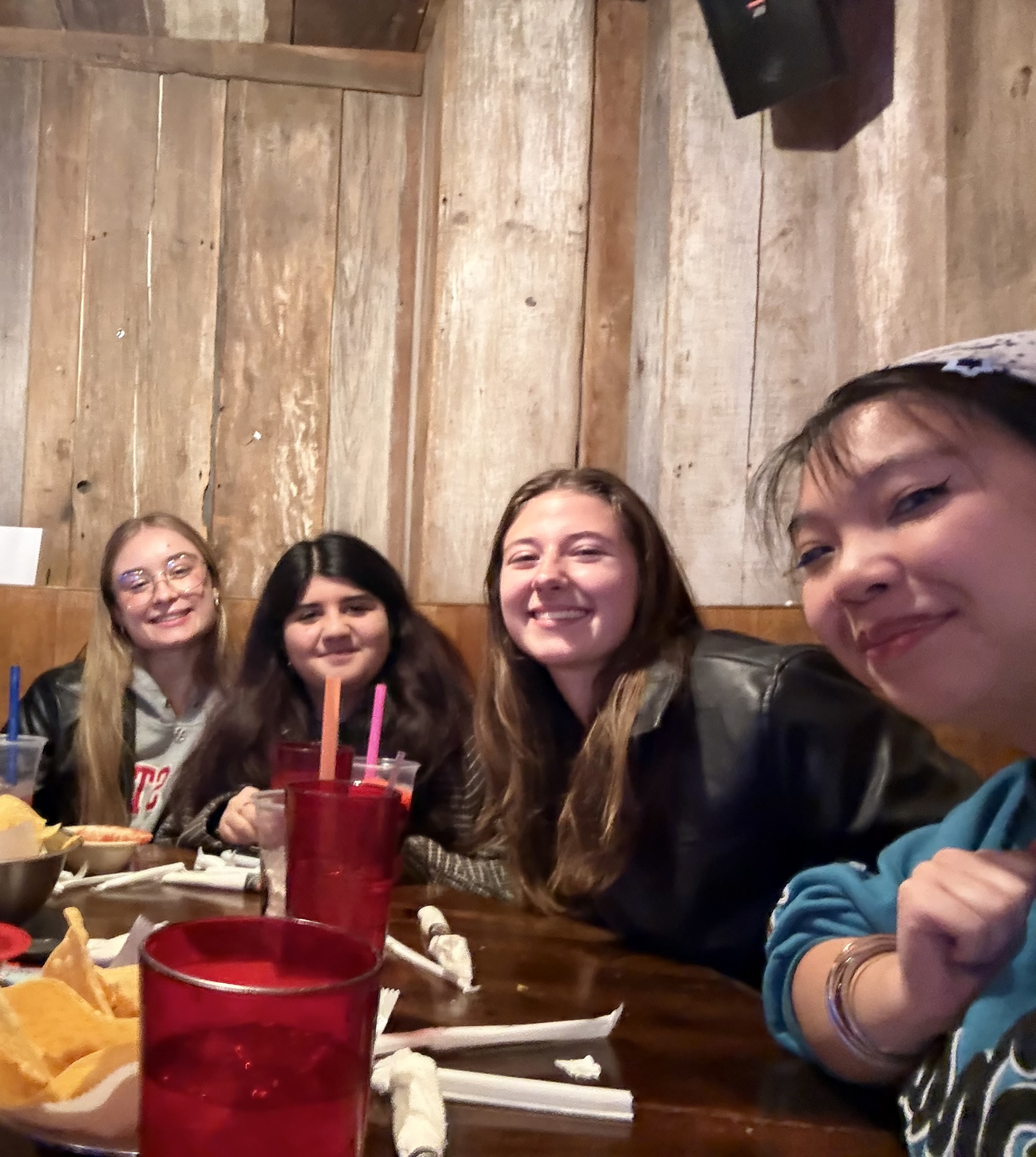
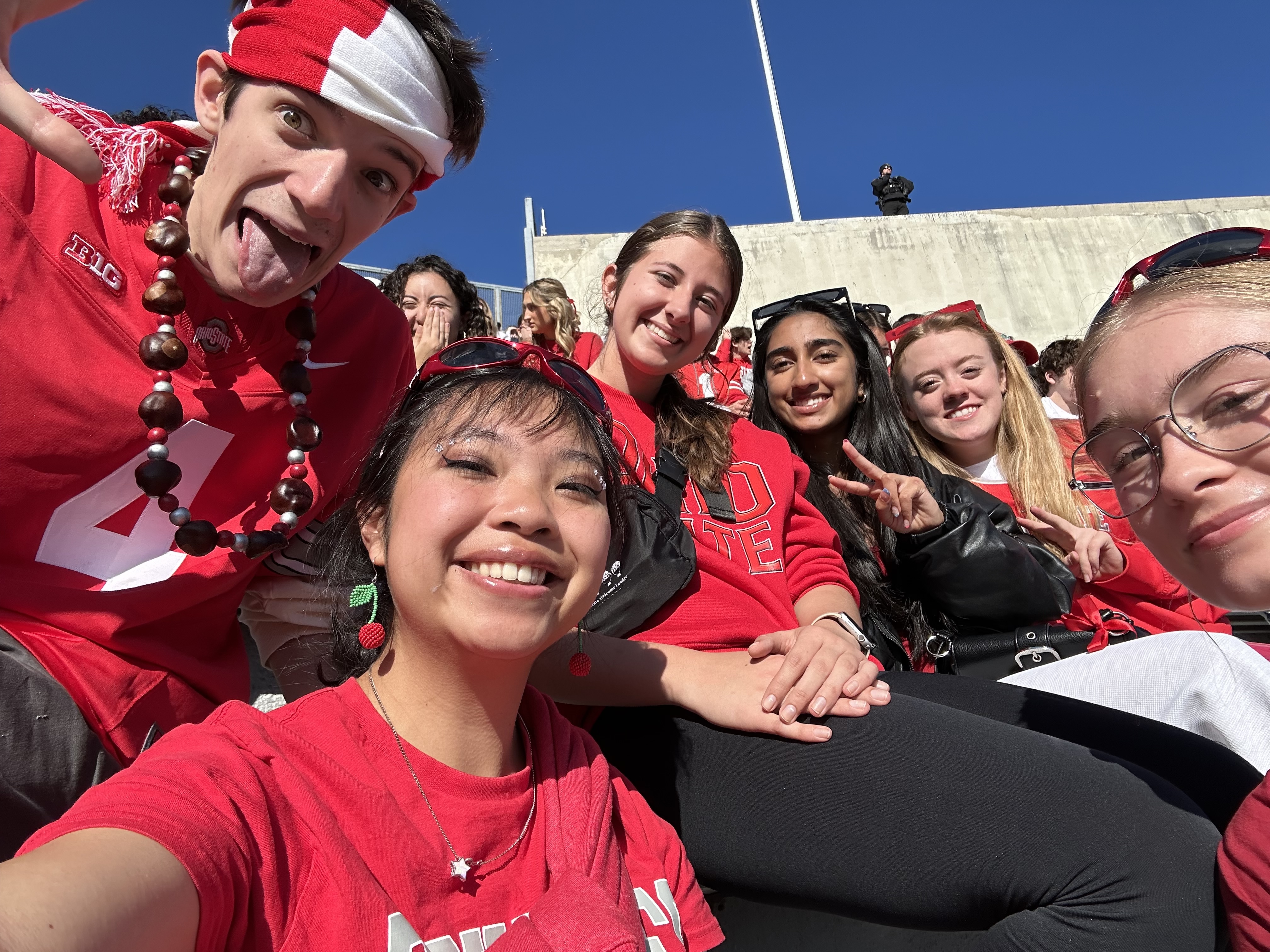
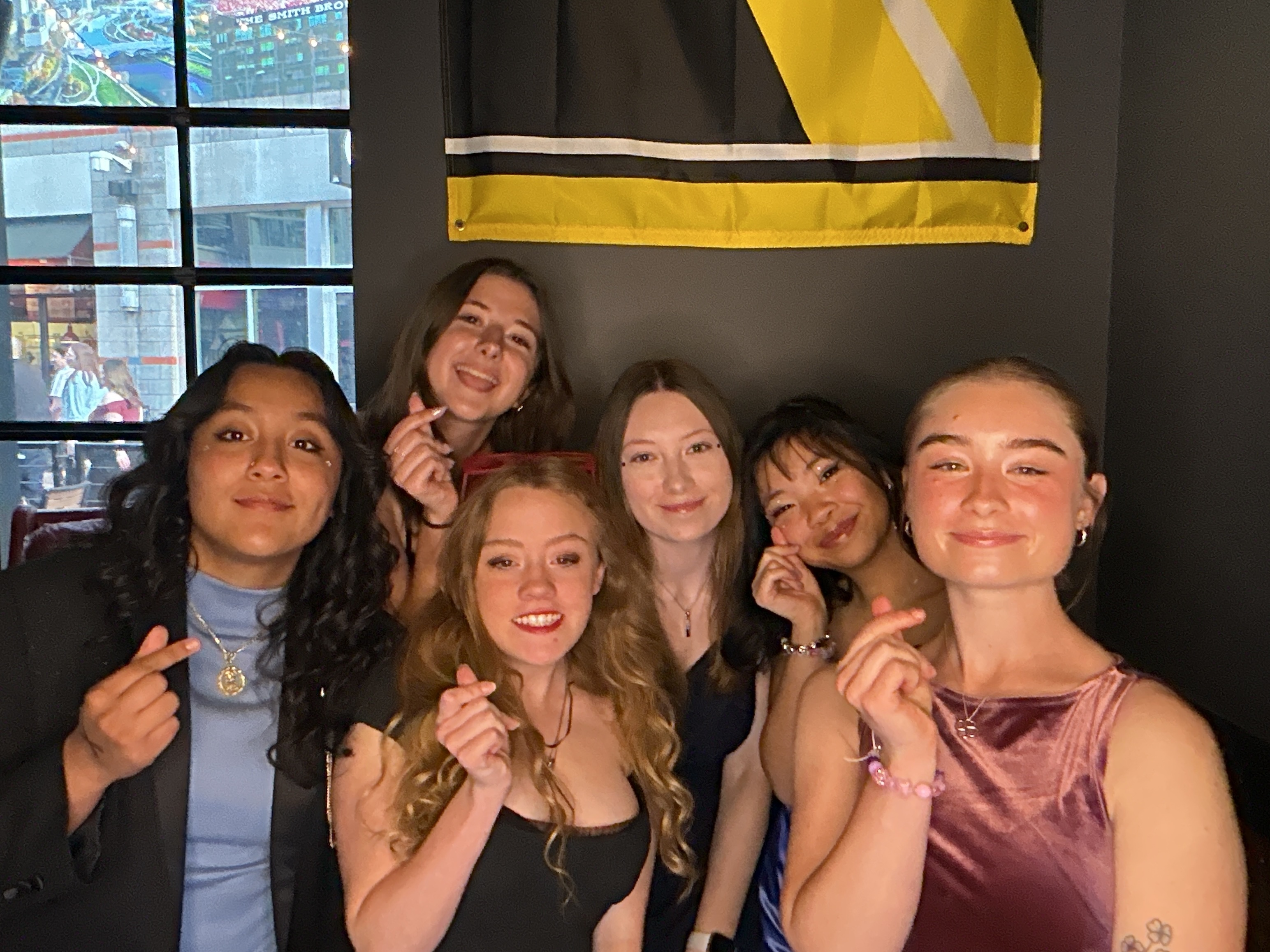
Last August, on move‑in day, three Humanitarian Engineering Scholars (HES) were strangers, brought together by a roommate assignment they hadn’t chosen. As members of HES, a living‑learning community at The Ohio State University, their “random” pairing, shaped by a shared academic home, soon became a steady source of encouragement, laughter, and belonging, shaping how each of them experienced their first year on campus.
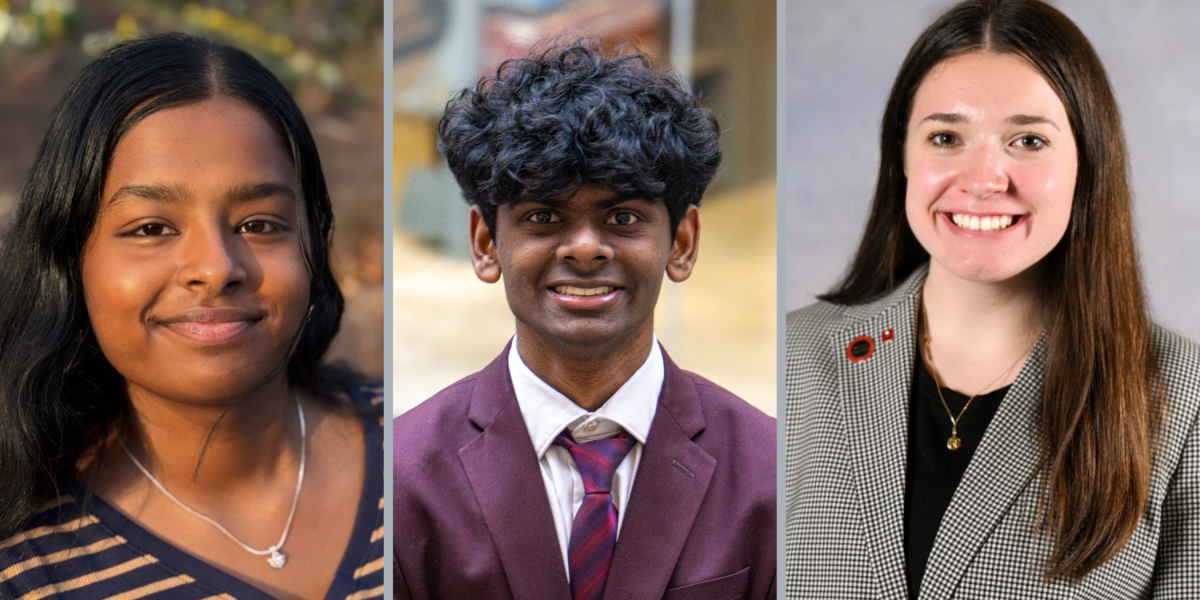
Today, Jessie Rice, Sophia Kim, and Zoe Kubinsky look back on being randomly assigned roommates as the start of something far bigger. Rice, a chemical engineering major from Delaware, Ohio, was paired with Kim, an exploration major from Akron, Ohio, and Kubinsky, a neuroscience major from Columbus, Ohio. What began as three roommates learning to navigate a new campus quickly turned into a trio that did nearly everything together.
“It feels like we are just constantly having sleepovers but happen to be university students at the same time,” Kim said. “Despite being The Ohio State University, it quickly became home because we had each other.”
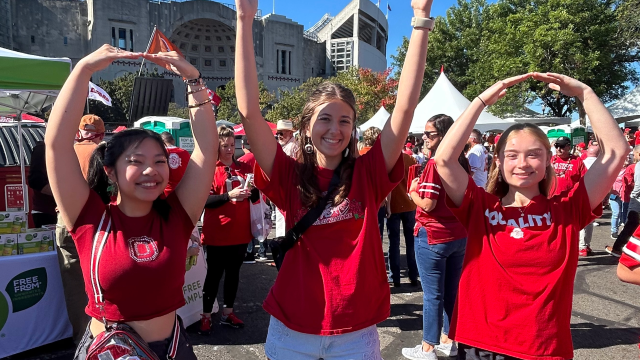
From the first week of the semester, HES played a central role in that transition. Welcome Week events gave Rice, Kim, and Kubinsky reasons to step out of their room, meet new people, and explore campus together, helping a large university feel smaller and more personal.
“I feel very grateful to be a part of a Scholars program, especially HES, because it gave me the opportunity to start meeting new people and making friends right away,” Rice said. “With the chaos of adjusting to living on campus and college workloads, there was the leisure of taking a brain break and going to an HES event.”
For Kim, staying involved beyond the classroom felt familiar. Having long been engaged in extracurricular activities, HES felt like a natural extension of how she builds community, and having roommates by her side made participation even easier.
“Having built in friends made attending events easier,” Kim said. “Each event felt new, but I had a safety blanket because I got to do it with Jessie and Zoe.”
Kubinsky agreed, noting that attending events as a group helped her connect more deeply with the Scholars community. “Anytime one of us went to an event, we would invite each other, and most of the time we just ended up going as a group,” she said. “It helped me meet more people and really enjoy my college experience.”
By the end of the academic year, each of them had attended more than 60 HES events. One weekly gathering quickly became a favorite: Baked Goods and Board Games, a consistent space to relax and connect.
“Whether people were just playing games and chatting or seeking advice, everyone came to be with one another,” Rice said.
For Kubinsky, the consistency mattered just as much as the activity. “It was really nice to know I had a weekly time to decompress and eat sweets,” she said. “I couldn’t have done it without them; they made OSU feel like a home.”
That sense of rhythm extended into academics as well. Though each student pursued different interests, their shared motivation helped them support one another through challenges.
“We want to be the best versions of ourselves, which we often bring out in each other,” Kim said. “We don’t see each other as competition, but as examples.”
Encouragement often came in small ways, like handwritten sticky notes on desks with reminders such as “We rise above.” “At one point or another, we all felt overwhelmed,” Kubinsky said. “Whether it was studying together, going on a walk, or getting food, having each other made it easier.”
Beyond academics, the trio learned how to build balance into their schedules. For Rice, transitioning to college meant leaving behind creative outlets she once relied on something HES helped replace.
“Just spending time with people through the program has given me a new outlet,” Rice said.
Together, the three also began attending yoga classes on campus during spring semester, creating intentional pauses in otherwise busy weeks and another way to support one another’s well being.
Looking back, their definition of success has shifted. “Success depends on resilience and the ability to ask for help,” Rice said. “Being part of this trio helped me realize I’m not doing this alone.”
Kim, who plans to declare strategic communications with minors in professional writing and English next semester, credits both the Scholars program and her roommates. “I’ve found success through academic encouragement, engaging events, and meaningful friendships,” she said.
For Kubinsky, HES reinforced a sense of belonging even as her academic interests differed from others. “Even if someone doesn’t know the answer, they know someone who does,” she said. “That support has meant everything.”
One year after that original housing assignment, the impact of that random decision is clear. In a university defined by its size, Rice, Kim, and Kubinsky found something far more personal a shared experience shaped by chance, strengthened by community, and sustained by friendship, proving that sometimes the most meaningful connections begin before you even realize what you’re signing up for.